



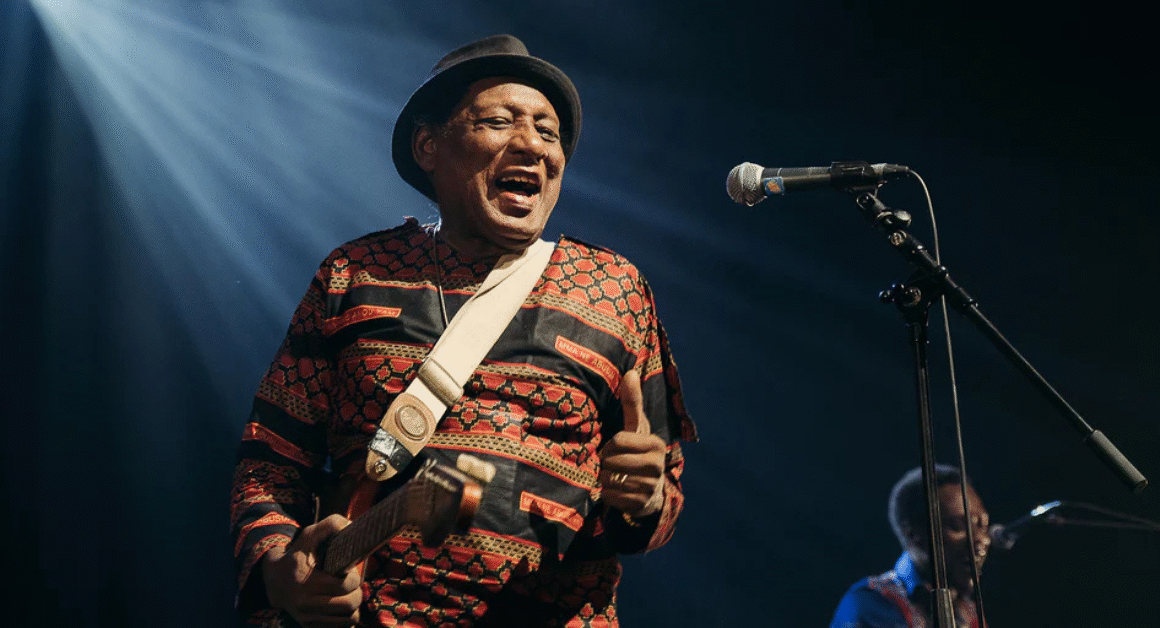
Legendary Ghanaian highlife musician Ebo Taylor has passed away at the age of 90, the Musicians Union of Ghana (MUSIGA) confirmed. He died early Saturday, 7 February 2026, at Saltpond Hospital. MUSIGA president Bessa Simons paid tribute, saying, “Ghana and indeed the world has lost a great son.” Taylor’s death comes just a month after celebrating his 90th birthday and a day after the launch of the Ebo Taylor Festival, organized to honor his extraordinary musical legacy. MUSIGA’s statement simply read: “Uncle Ebo Taylor, rest in perfect peace.”
Born Deroy Taylor on 6 January 1936 in Cape Coast, he became one of Ghana’s most influential guitarists, composers, bandleaders, and producers. Over more than six decades, he shaped the sound of highlife and Afrobeat, blending traditional Ghanaian rhythms with jazz, funk, and soul to create a signature style recognized worldwide.
Taylor first gained attention in the late 1950s with the Stargazers and Broadway Dance Band. In 1962, he moved to London with his Black Star Highlife Band, where he collaborated with Afrobeat pioneer Fela Kuti and other African musicians. Returning to Ghana, he produced records for major artists including Pat Thomas and C.K. Mann.
His music reached new audiences globally in the 21st century, with international artists sampling his work—most notably Usher on “She Don’t Know” featuring Ludacris, which drew from Taylor’s “Heaven.” He released acclaimed albums such as Love and Death (2008), Appia Kwa Bridge (2012), and Yen Ara (2018). Even into his late 80s, Taylor continued to perform and record, most recently releasing Ebo Taylor JID022 in 2025 as part of the Jazz Is Dead series.
MUSIGA described him as “Saltpond’s light… Ghana’s legend… the world’s icon,” noting that he had formed and led more than a dozen bands, including his last, the Ebo Taylor and Family Band. His death is mourned by musicians and fans in Ghana and worldwide, many of whom credit him with elevating West African music on the global stage.
Taylor’s influence also helped shape the modern afrobeats sound, influencing artists like Wizkid, Drake collaborators, and others who draw from highlife and Afrobeat traditions. Known affectionately as “Uncle Ebo” in his hometown of Saltpond, he spent much of 2025 recording new material for his third album in a decade while observing Covid-19 protocols.
Throughout his career, Taylor remained dedicated to his craft, emphasizing authenticity in music. “The music we made was real music; it made you stop and think,” he said. Even as afrobeats gained global popularity, Taylor celebrated his connection to the styles he helped pioneer.
Despite the loss of longtime collaborators Essilfie-Bondzie and Tony Allen earlier this year, Taylor continued to work in his home studio, sharing a vision of music as a bridge between generations. He toured Europe extensively with his Saltpond City Band, led by his son Roy, and remained committed to introducing his music to younger audiences and collaborating with contemporary Ghanaian artists like M.anifest and Reggie Rockstone.
Taylor hoped to be remembered not as a star, but as a man of the people: “I want to be remembered for my music, for my art, and as Ebo Taylor the man,” he said.